
Our Professional Water Damage Restoration Team in Melbourne is a certified emergency restoration provider serving homeowners across Melbourne and nearby suburbs. Our certified technicians operate 24/7 to mitigate damage caused by flooding, burst pipes, and roof leaks. Using industry-standard drying systems, dehumidifiers, and moisture mapping technology, we restore residential properties quickly and safely
In this guide, you’ll discover what the complete guide to water damage repairs really involve, how the process works, how much it costs, and when it’s time to call the experts. Let’s dive into it.
Key Takeaways
- Act fast: Immediate action prevents costly repairs, mould growth, and structural issues. Contact certified water damage restoration professionals within the first 24 hours.
- Know the service difference: Mitigation halts the damage, repair fixes affected materials, and restoration returns your home to a pre-damage condition.
- Inspection is critical: Professionals use moisture meters and thermal imaging to locate hidden water in walls, ceilings, and floors.
- Mould must be prevented early: Antimicrobial treatments should be applied immediately after water removal to block mould development.
- Documentation supports insurance claims: Always take photos, keep receipts, and get a written quote from a licensed restoration provider.
- Costs vary by severity and speed: Faster intervention can reduce repair costs dramatically—delays often multiply damage.
- Don’t DIY serious damage: Grey water, sewage (black water), or large-scale intrusion require licensed experts for health and insurance compliance.
What Are Water Damage Repair Services?
Water damage repair services are professional interventions designed to remediate residential or commercial properties affected by flooding, burst pipes, roof leaks, or stormwater intrusion. These services go beyond surface-level cleanup, they aim to restore a safe, dry, and mould-free indoor environment.
Key Terms Defined
Water Damage Repair: Focuses on fixing or replacing damaged building materials such as plasterboard, skirting boards, timber flooring, and carpet once moisture has been removed. This step restores physical functionality to the affected areas.
Water Damage Restoration Services: A full-scale return to pre-damage condition, involving structural drying, mould remediation, antimicrobial sanitisation, and cosmetic finishing (e.g., painting, surface refinishing). It ensures long-term habitability and structural safety.
Water Mitigation: The initial emergency response that includes source isolation, water extraction, and industrial drying to halt progressive damage. This is typically performed immediately after detection.
Summary: Mitigation controls the damage, repair fixes the compromised elements, and restoration brings your property back to its original state.
What Do Water Damage Repair Services Include?
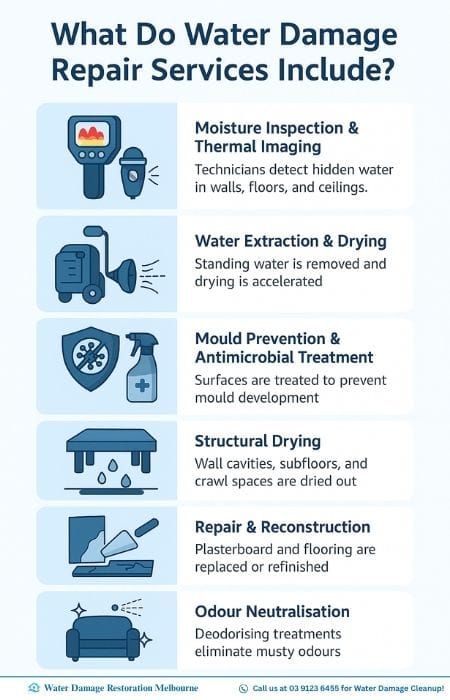
Professional water damage repair is more than just drying carpets. A complete service involves several technical and preventive steps to fully restore the affected property:
1. Moisture Inspection & Thermal Imaging
Technicians use infrared cameras and moisture meters to detect hidden water intrusion within walls, floors, and ceilings—areas invisible to the naked eye.
2. Water Extraction & Drying
Using industrial vacuums and high-capacity air movers, standing water is removed quickly, and drying is accelerated to prevent structural damage.
3. Mould Prevention & Antimicrobial Treatment
To prevent mould development, surfaces are treated with antimicrobial agents immediately after water removal.
4. Structural Drying
Specialist drying of wall cavities, subfloors, crawl spaces, and timber framing is essential to avoid long-term deterioration and rot.
5. Repair & Reconstruction
Water restoration services may include:
- Replacing damaged plasterboard
- Floor replacement or refinishing
- Repainting and retexturing affected areas
6. Odour Neutralisation
Deodorising solutions and ozone treatments are applied to remove musty odours from carpets, walls, and furnishings.
How Do Professionals Fix Water Damage?
Effective water damage restoration services involves a step-by-step process designed to eliminate moisture, prevent contamination, and restore safety:
Step 1: Site Assessment & Water Classification
Our professional restoration technicians assess the scope of damage and identify the type of water:
- Category 1: Clean water (e.g., from broken pipes)
- Category 2: Grey water (e.g., from appliances)
- Category 3: Black water (e.g., from sewage)
Step 2: Contamination & Damage Classification
The class of water damage is determined by how far the moisture has spread:
- Class 1: Minimal absorption
- Class 4: Deeply saturated materials like hardwood or plaster
For industry standards on water classification and contamination levels, see IICRC’s official water damage restoration guide.
Step 3: Water Extraction
High-powered pumps and wet vacuums quickly remove standing water from all affected areas.
Step 4: Drying & Dehumidification
Air movers and industrial-grade dehumidifiers are strategically placed to extract residual moisture from floors, walls, and indoor air.
Step 5: Cleaning & Surface Sanitisation
Antimicrobial and antibacterial treatments are applied to kill bacteria, fungi, and odour-causing microbes.
Step 6: Ongoing Moisture Monitoring
Moisture meters and thermal sensors are used throughout the process to confirm that all affected materials are completely dry.
Need Expert Water Damage Restoration?
Our certified Melbourne team follows every step; assessment, drying, sanitisation, and ongoing monitoring to ensure your property is fully restored and safe.
Book Your Professional Inspection Now ➔When Should You Call for Water Damage Repair?
Immediate action can prevent permanent damage and expensive repairs. Contact professional water damage restoration services as soon as you notice any of the following:
Critical Signs You Need Immediate Help:
- Musty odours coming from carpets or internal walls
- Discoloration or water stains on ceilings or drywall
- Damp or sagging carpet in living or storage areas
- Swollen skirting boards or warped timber flooring
- Burst or leaking pipes, especially in walls or ceilings
- Stormwater intrusion or indoor flooding after heavy rain
- Roof leaks visible after rain events
For a full list of signs your home needs expert help, visit our signs you need professional water damage restoration article.
Tips for Preventing Water Damage in Old Victorian Homes
Victorian homes in Melbourne are architectural treasures, but they also face elevated risks of water damage due to outdated infrastructure and porous construction materials. Here’s how to protect your heritage property from leaks, rising damp, and structural decay:
1. Upgrade Aging Plumbing Systems
Many Victorian-era homes still use galvanized steel or lead pipes, which corrode and leak over time.
Action Tip: Hire a licensed plumber to inspect your plumbing. Upgrading to copper or PEX piping improves water safety and reduces the risk of future leaks.
2. Seal Timber Window Frames and Sills
Moisture intrusion through timber window frames causes rot, mould, and internal damage.
Action Tip: Reseal windows every 2–3 years using waterproof filler and weatherproof paint to maintain a tight moisture barrier.
3. Maintain Original Slate or Tile Roofs
Decorative slate roofing or terracotta tiles are prone to cracks, shifting, or blocked valleys over time.
Action Tip: Book yearly roof inspections by a qualified roofing contractor to identify and replace damaged tiles, flashing, or ridge capping.
4. Install Effective Subfloor Ventilation
Poor airflow beneath timber flooring can lead to rising damp, wood rot, and subfloor mould.
Action Tip: Add mechanical subfloor fans or passive vents to improve air circulation and reduce moisture retention in foundations.
5. Clear Gutters and Install Gutter Guards
Clogged gutters and downpipes are common causes of overflow and fascia board rot in heritage homes.
Action Tip: Clean gutters each season and install leaf guards to prevent blockages that lead to eaves water ingress.
6. Monitor for Wall Cracks and Efflorescence
White powdery stains (efflorescence) or cracked render on brick walls can indicate trapped moisture or hidden water leaks.
Action Tip: If you notice crumbling surfaces or salt deposits, call a damp specialist to inspect for water ingress or compromised brickwork.
Schedule a Water Damage CheckHow Much Does Water Damage Repair Cost in Melbourne?
The cost of water damage repairs depends on the size of the affected area, the type of water involved, and how fast action is taken.
| Service | Average Cost | What’s Included |
| Moisture Inspection | $200 – $500 | Thermal imaging, damage report |
| Water Extraction & Drying | $1,000 – $3,000 | Pumps, drying, dehumidifiers |
| Wet Carpet Cleaning | $120 – $1,000+ | Extraction, deodorising, drying |
| Mould Remediation | $500 – $6,000+ | Treatment, air scrubbing, HEPA filtration |
| Ceiling & Wall Repairs | $2,000 – $3,000+ | Patching, painting, drying |
| Structural Repairs | $2,500 – $10,000+ | Replacing timber, flooring, internal wall rebuilds |
These are typical Melbourne rates and may vary based on urgency or suburb.
Check out the comprehensive water damage restoration cost guide here.
Is It Safe to Repair Water Damage Yourself?
For small leaks or clean water spills, it’s sometimes okay to manage drying on your own. But if the water is from grey (used water) or black (sewage) sources, or the damage covers a large area:
- Call a professional immediately
- DIY efforts may lead to hidden mould or structural damage
- Insurance might not cover if professional documentation is missing
How Long Does It Take to Dry and Repair Water Damage?
Restoration timelines depend on water category, extent of damage, and structure type:
| Phase | Timeframe | Scope |
|---|---|---|
| Water Extraction | Same-day | Removal of standing water and initial surface cleaning |
| Drying Process | 24–72 hours | Dehumidifying carpets, walls, floors |
| Structural Repairs | 3–7+ days | Plastering, flooring, painting, and antimicrobial treatment |
Larger commercial buildings or homes with extensive damage may require additional weeks for full structural drying and restoration.
Is Water Damage Covered by Insurance?
In most cases, home insurance does cover sudden and accidental water damage, including events like:
- Burst pipes
- Stormwater entry
- Overflowing appliances
What You’ll Need to File a Claim:
- Acertified inspection report from a licensed restoration provider
- Photographic evidence (before, during, and after remediation)
- A formal restoration quote detailing repair scope and costs
Always check your policy for exclusions related to gradual leaks or unreported damage.
What Happens If You Delay Water Damage Repairs?
Ignoring or postponing repairs can quickly escalate the damage and risks:
Consequences of Delayed Action:
- Rapid mould infestation, affecting air quality and health
- Timber rot in framing, skirting boards, or flooring
- Electrical hazards from moisture intrusion near wiring
- Structural weakening of walls, ceilings, or subfloor
A delay could turn a $2,000 fix into a $20,000 rebuild—especially if mould remediation or structural replacement is required.
For example: In Docklands, a homeowner delayed repair for a month after a minor leak. Mould infested the subfloor and skirting boards, leading to a $13,000 restoration bill instead of $2,000.
Common Mistakes Homeowners Make After Water Damage
Many homeowners unintentionally worsen damage by taking the wrong steps:
Top Mistakes to Avoid:
- Delaying action, hoping the area will dry naturally.
- Using household fans instead of commercial-grade dehumidifiers.
- Ignoring hidden zones like subfloors, wall cavities, and insulation.
- Painting over stains without fixing moisture or mould beneath.
- Not documenting damage or notifying the insurer immediately.
These missteps can lead to long-term structural problems, mould outbreaks, and insurance claim denial.
Emergency Water Damage Checklist for Homeowners
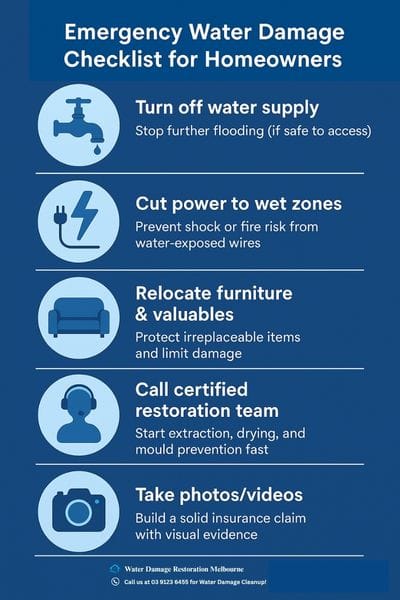
If you’ve discovered water intrusion in your home, taking immediate steps can minimise structural damage, reduce the risk of mould growth, and improve your chances of a successful insurance claim. Follow this checklist:
Shut Off the Main Water Supply: If the water leak is due to a burst pipe, appliance failure, or internal plumbing issue, turn off your main water valve immediately to prevent further flooding (only if safe to access).
Cut Power to Affected Zones: Water near electrical outlets, light switches, or appliances poses a serious electrical hazard. Shut off electricity at the circuit breaker to avoid shock or fire risk.
Move Furniture and Valuables to a Dry Area: Relocate furniture, electronics, and personal items to protect them from water exposure. Use wood blocks or aluminium foil under furniture legs to prevent staining.
Contact a Certified Water Damage Restoration Specialist: Call a licensed restoration technician to begin immediate water extraction, structural drying, and mould prevention.
Document the Damage Thoroughly: Take high-resolution photos and videos of all affected areas — including carpets, walls, ceilings, and personal belongings to support your home insurance claim.
Tools Professionals Use for Water Damage Repairs
Certified water damage specialists use advanced equipment to ensure complete, safe, and efficient restoration. These tools are critical for uncovering hidden damage and preventing secondary issues like mould.
Key Equipment Used in Water Damage Restoration:
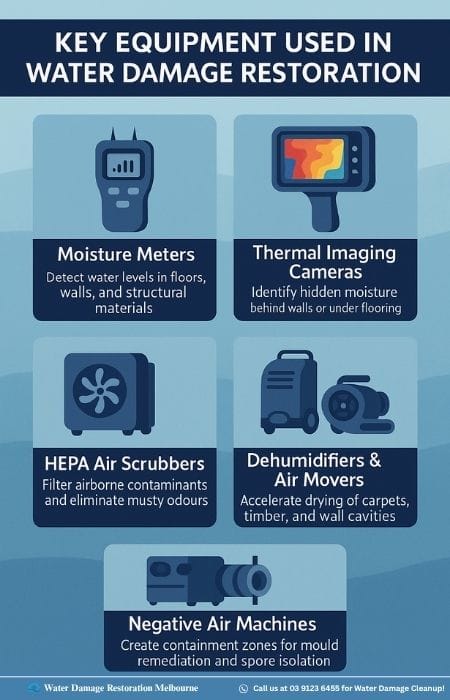
Moisture Meters: Digital tools used to measure water saturation levels in timber flooring, plasterboard, subflooring, and internal wall cavities. Essential for confirming complete dry-out.
Thermal Imaging Cameras: Infrared cameras that detect temperature differentials, revealing hidden moisture pockets behind walls, under flooring, or within insulation.
HEPA Air Scrubbers: High-efficiency air filtration systems that remove airborne mould spores, dust particles, and contaminants from the indoor environment, improving air quality during restoration.
Dehumidifiers & Air Movers: Industrial-grade equipment designed to remove residual humidity from carpets, timber structures, and gyprock walls, speeding up the evaporation process and reducing the risk of secondary damage.
Negative Air Machines: Containment tools that use negative pressure to isolate mould-affected zones, preventing the spread of fungal spores during mould remediation procedures.
This professional-grade equipment ensures every restoration is health-safe, thorough, and compliant with industry standards.
Conclusion
Even a small leak can escalate into major structural damage if left untreated. Professional water damage repair ensures fast moisture detection, mould prevention, and complete structural drying, protecting both your property and health.
If you’re facing water intrusion from a burst pipe, leaking roof, or flood, don’t wait. Our certified team is available 24/7 across Melbourne’s northern, western, and eastern suburbs. We follow strict restoration protocols and support insurance claims with proper documentation.
Don’t wait—get expert water damage restoration now.
Call our certified water damage specialists and the restoration will starts immediately with one call.
Contact Our Certified Melbourne Team ➔Frequently Asked Questions
Can I stay in my home during water damage repairs?
Yes, in most cases. But if there’s mould or structural concerns, temporary relocation may be advised.
How can I prevent water damage in the future?
Regular roof and pipe inspections, installing sump pumps, and checking for leaks can help.
Do I need to replace wet carpet or can it be dried?
Depends on the water type. Clean water-damaged carpets can often be dried. Black water contamination usually requires replacement.
How do you test for hidden moisture in walls?
We use thermal cameras and hygrometers to detect moisture without tearing down walls.
Will I need to replace drywall or skirting boards after water damage?
If they’re swollen, soft, or show signs of mould, they should be replaced. Our team can assess the damage on-site.
What types of water cause the most damage?
Black water from sewage is the most hazardous and destructive. Grey water from sinks or washing machines requires sanitisation. Clean water is safest but still damaging if left untreated.


